Utah ranchers selling quarter and half beef
How much freezer space do you need for a quarter, half or whole beef?
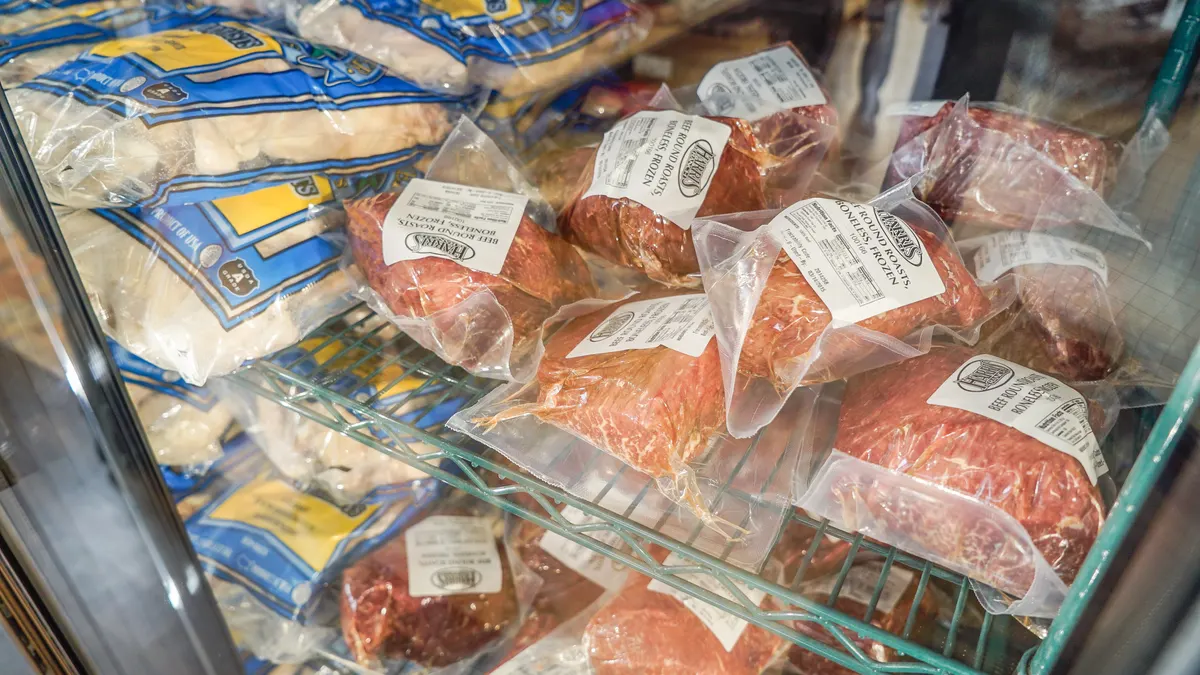
Before you put down a deposit on a beef share, make sure it will fit. The short answer from university extension guides: plan on about 1 cubic foot of freezer space for every 35 to 40 pounds of cut and wrapped beef, and a little more if packages are odd shapes (Oklahoma State University Extension, University of Maine Extension).
Quick answers by share size
- Quarter: University of Minnesota Extension says a typical quarter from a 1,300 lb animal gives about 142 lb of meat and needs at least 4.5 cubic feet in a chest freezer or 5.5 cubic feet in an upright freezer (UMN Extension). University of Maine Extension puts a quarter at about 4 cubic feet (UMaine).
- Half: about 8 cubic feet (UMaine).
- Whole: about 15 cubic feet (UMaine).
The UMaine numbers come from their worked example of a 1,200 lb grass-fed steer that yields about 560 lb of boneless cuts. A bigger animal, or bone-in cuts, means more pounds and more space. Ask your ranch for the expected hanging weight of your share.
Chest or upright?
The same 142 lb quarter needs 4.5 cubic feet in a chest freezer but 5.5 cubic feet in an upright, per UMN Extension. So if you are shopping for an upright, size up compared with a chest.
Space by packaged pounds
This table applies the 35 to 40 pounds per cubic foot rule of thumb (OSU, UMaine) to a few common share sizes. The cubic feet are our arithmetic, not a figure from the sources, and they assume the freezer is otherwise empty.
| Packaged beef | Example | Freezer space (rule of thumb) |
|---|---|---|
| 100 lb | Small quarter or an eighth plus extras | 2.5 to 2.9 cu ft |
| 142 lb | Typical quarter (UMN example) | 3.5 to 4.1 cu ft |
| 225 lb | Side (half) from an average carcass (OSU example) | 5.6 to 6.4 cu ft |
| 280 lb | Half of the UMaine grass-fed example | 7.0 to 8.0 cu ft |
| 450 lb | Whole carcass, average (OSU example) | 11.2 to 12.9 cu ft |
| 560 lb | Whole grass-fed steer (UMaine example) | 14.0 to 16.0 cu ft |
Note that the UMN quarter figure (4.5 cubic feet for 142 lb) is a bit more generous than the rule of thumb (about 3.6 to 4.1). Leaving that extra room makes it easier to find things.
From hanging weight to packaged pounds
Ranches usually price by hanging weight, the carcass weight before cutting. You take home less than that. Oklahoma State University Extension says 24 to 45 percent is lost to cutting, trimming and boning, depending on how fat the carcass is, and about 25 percent for an average (yield grade 3) carcass (OSU). The calculator below uses that 24 to 45 percent range.
Before your beef comes home
- Measure your free freezer space, not the total size on the label, if the freezer already holds food.
- Ask the ranch for the expected hanging weight and whether cuts are bone-in or boneless.
- If space is tight, ask about more ground beef and fewer bone-in roasts on your cut sheet, or split a share with another family.
- Keep the freezer at 0 F or below. See how long a beef share keeps and how to thaw it.
Ready to buy? Browse the Utah ranch directory, or ranches in Idaho and Wyoming.
Sources fetched October 29, 2026: University of Minnesota Extension, Oklahoma State University Extension, University of Maine Cooperative Extension Bulletin #1071. No ranch or brand paid to be listed.
See something wrong? Email brad@uofyou.org.