Utah ranchers selling quarter and half beef
Why your beef share is stamped "Not for Sale": custom-exempt beef in Utah, explained
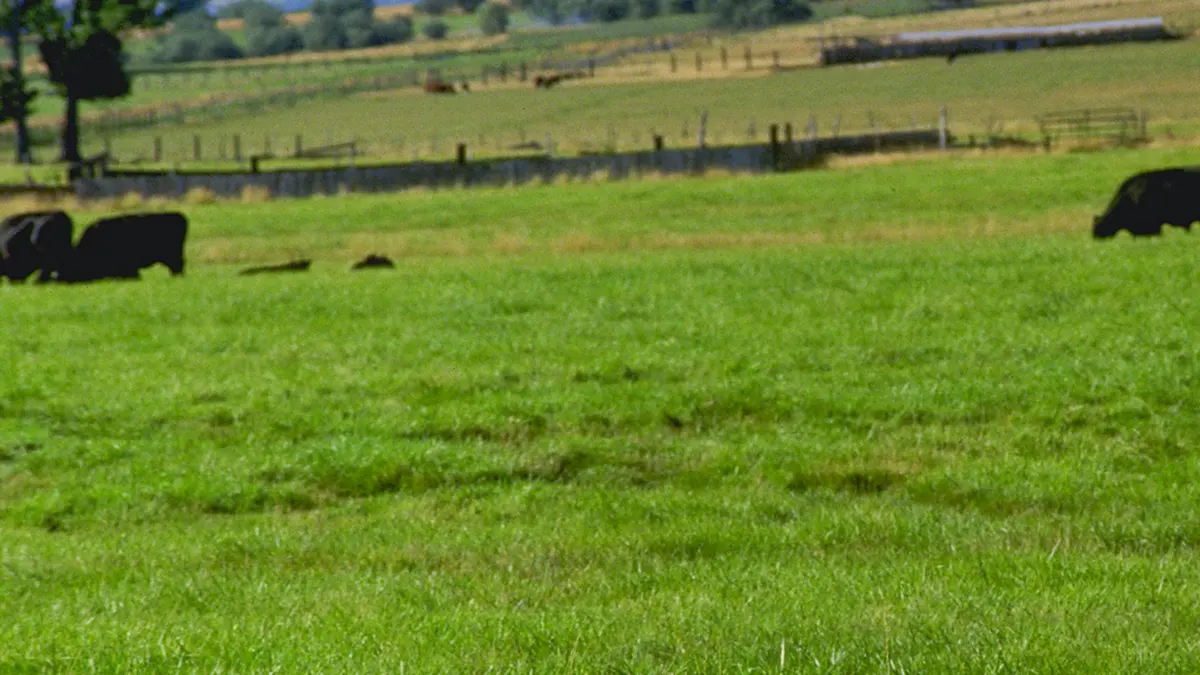
When you buy a quarter or half beef, the packages that come home may carry a "Not for Sale" mark, and the paperwork may talk about owning part of the animal. That surprises a lot of first-time buyers. This page explains the federal and Utah rules behind it in plain words, with a link to the rule text for every point.
The short version
Federal law lets a butcher process an animal for its owner without a government inspector on site, as long as the meat is only for the owner's own household. This is called custom-exempt processing. The meat has to be marked "Not for Sale" and kept that way until the owner picks it up (9 CFR 303.1).
What the federal rule says
- The inspection requirements do not apply to custom slaughter of cattle delivered by the owner, or to custom cutting of the carcass, when the meat is exclusively for use in the owner's household by the owner, members of the household, nonpaying guests and employees (9 CFR 303.1(a)(2)).
- The butcher must plainly mark the custom-processed meat "Not for Sale" right after it is prepared and keep it marked until it is delivered to the owner (9 CFR 303.1(a)(2)(iii)).
- If the shop also handles meat for sale, that meat must be kept separate from custom meat at all times (9 CFR 303.1(a)(2)(ii)).
- Custom shops still have to meet federal sanitation requirements, and they must keep records of the animals they process and the names and addresses of the owners (9 CFR 303.1).
Exempt from inspection is not the same as no rules. It means no inspector checks each animal, while the shop still has to follow sanitation and recordkeeping rules (9 CFR 303.1).
What Utah adds for on-farm slaughter
Some shares are harvested at the ranch by a mobile butcher and then taken to a shop for cutting. Utah's rule R58-11 covers that, and calls it farm custom slaughtering (Utah Admin. Code R58-11):
- Anyone doing farm custom slaughtering as a business needs a license from the Utah Department of Agriculture and Food, renewed every calendar year (R58-11-3 and R58-11-9).
- Before slaughter, the animal's owner must get a Brand Inspection Certificate, also called a Custom Slaughter-Release Permit, from a department brand inspector, paying the brand inspection fee and beef promotion fee. Farm custom slaughter tags cost $1 each (R58-11-6).
- The owner signs a statement saying the animal will not receive meat inspection, is for the owner's use, immediate family, nonpaying guests or full-time employees, and will be stamped "NOT FOR SALE" and not sold (R58-11-6).
- Each quarter of beef is stamped "NOT FOR SALE" in letters at least 3/8 inch tall and gets a farm custom slaughter tag (R58-11-6).
- When the carcass is hauled to a shop, it must be under refrigeration at 40 F within one hour of slaughter (R58-11-4).
The R58-11 copy on the department's site lists its last substantive amendment as November 23, 2015. Check with the department if you need the current official text.
What this means for you as a buyer
- The beef is for your household. Under the federal rule, custom-exempt beef is for you, your household, nonpaying guests and employees. Splitting a share with friends usually means each buyer owns their own portion, and University of Minnesota Extension describes a quarter as the cost of the whole animal divided by 4, with each buyer paying their own share of processing (UMN Extension).
- Do not resell it. Custom-exempt beef cannot be sold (9 CFR 303.1, R58-11-6).
- Two bills can be normal. Several ranches in our directory charge by hanging weight and list processing, or cut and wrap, as a separate cost. See what a quarter beef really costs for how that adds up.
Questions to ask your ranch before you pay a deposit
- Is the beef processed at a custom-exempt shop or at a USDA or state inspected plant?
- Is the animal harvested on the ranch by a licensed mobile butcher, or at the shop?
- Do I pay the butcher directly, and who fills out the cut sheet?
- Will my packages be labeled with the cut and weight?
Whatever the answers, the same freezer and thawing rules apply once the beef is home. See how long a beef share keeps and how to thaw it.
Ready to buy? Browse the Utah ranch directory.
Sources fetched October 27, 2026. This page summarizes public rules and is not legal advice. No ranch paid to be listed.
See something wrong? Email brad@uofyou.org.