Utah ranchers selling quarter and half beef
How to cook every cut in your beef share
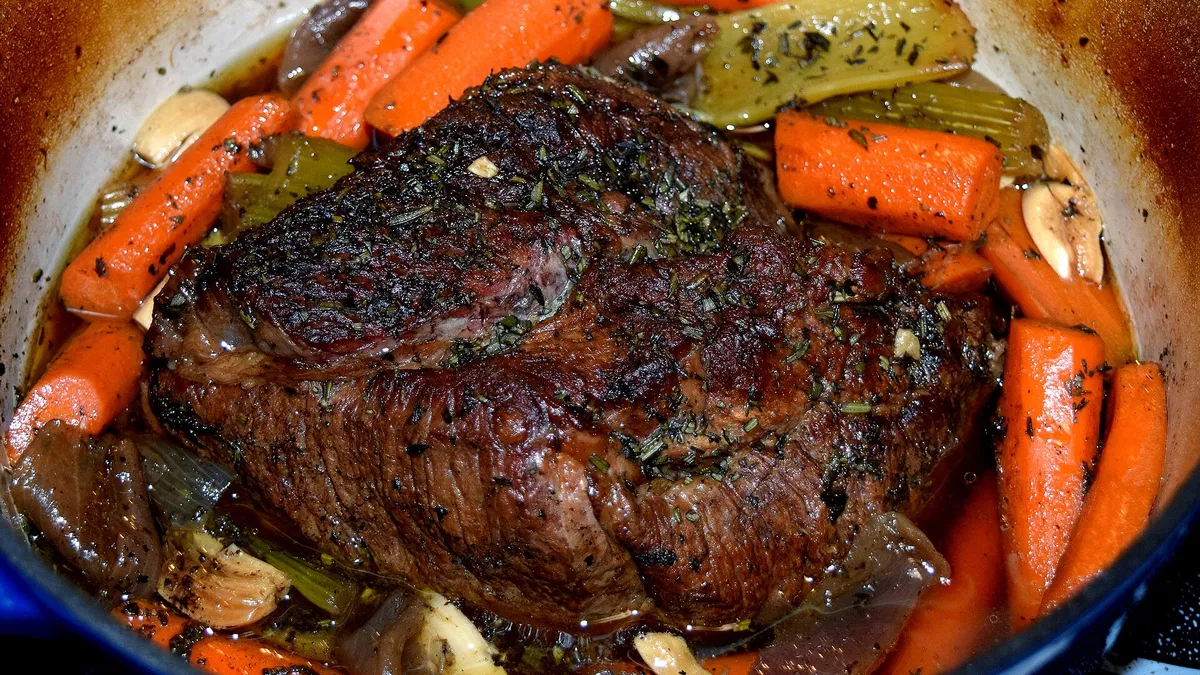
Your freezer is full, and half of the packages say chuck, round or brisket instead of ribeye. Here is a plain guide to what each cut is for, using university extension guides. The short version: tender cuts get quick, dry heat. Tough cuts get low heat, a lid and some liquid, and they turn out fork-tender.
The one rule that covers most of your freezer
- Dry heat for tender cuts. Tender cuts from the rib and loin are best cooked by dry heat: roasting, broiling, pan-broiling, pan-frying, stir-frying or grilling (K-State Extension).
- Moist heat for less tender cuts. Less tender cuts from the round, chuck, brisket and shank need moist heat: braising, cooking in liquid, or a pressure pan. The longer, lower-temperature cooking with moisture softens the connective tissue (K-State Extension).
- Moist heat means indirect heat with added liquid or held-in moisture, usually lower heat and longer times. Dry heat uses high heat and short times (University of Maryland Extension).
- Reading the label: look for the word rib or loin on the package to know it is a tender cut (K-State Extension).
Cut by cut
Methods follow the National 4-H meat identification list published by University of Maryland Extension and the cooking chart in the K-State Extension guide "Cooking with Beef". "Either" means the guides list both dry and moist heat for that cut.
| Package says | From the | How to cook it | Good to know |
|---|---|---|---|
| Ribeye, rib steak, rib roast | Rib | Dry heat: grill, broil, pan-fry or roast | Tender. All rib and loin cuts are dry-heat cuts. |
| T-bone, porterhouse, strip, tenderloin (filet) | Loin | Dry heat: grill, broil, pan-fry or roast | Your premium steaks. Marinate only for flavor. |
| Top sirloin, tri-tip | Sirloin | Dry heat: grill, broil, pan-fry, stir-fry or roast | Good everyday steaks and stir-fry strips. |
| Flat iron (top blade), ranch (shoulder center), chuck eye steak | Chuck | Dry heat works | The tender chuck steaks. Good for family steak night. |
| Chuck roast, arm roast, blade roast, 7-bone pot roast | Chuck | Moist heat: braise or cook in liquid | Classic pot roast. More fat and flavor than round roasts. |
| Short ribs | Plate | Moist heat: braise | Moist heat per both guides. |
| Brisket | Brisket | Moist heat: braise or stew | The flat half is less fatty. Also used for corned beef. |
| Shank cross cuts | Shank | Moist heat: braise or cook in liquid | All brisket and shank cuts are moist-heat cuts. |
| Top round steak, round tip steak | Round | Dry heat, after a tenderizing marinade | Also good sliced thin for stir-fry. |
| Bottom round, eye of round, rump roast | Round | Either: oven roast, or braise | Leaner, economical roasts. |
| Round steak, bottom round steak | Round | Moist heat: braise | Both guides list moist heat. |
| Flank and skirt steak | Flank and plate | Either, usually marinated, then grilled or broiled | Marinate first if you grill or broil them. |
| Stew meat | Chuck or round | Moist heat: simmer | Cubes about 3/4 to 1 1/2 inch cook evenly. |
| Cubed steak | Varies | Either: pan-fry or braise | Already tenderized by machine. |
| Ground beef | Varies | Dry heat: pan, grill, broil or bake | Cook to 160 F. |
Got a front quarter? Most of your packages will be chuck, brisket and short ribs, so plan on more pot roasts and stews. A hind quarter leans toward round roasts and steaks plus the loin steaks. See what's in a quarter or half.
Making tougher steaks tender
- Less tender cuts such as top round steak, eye round steak, chuck shoulder steak, skirt steak and flank steak should be marinated for tenderness, for at least 6 hours. Marinating longer than 24 hours can make the surface mushy (K-State Extension).
- A tenderizing marinade needs an acidic ingredient, such as citrus or other fruit juice, tomato, vinegar, wine, soy sauce, or buttermilk or yogurt (K-State Extension).
- Tender steaks only need 15 minutes to 2 hours, and that is for flavor (K-State Extension).
- Always marinate in the refrigerator, never on the counter. Use about 1/4 to 1/2 cup of marinade for each 1 to 2 pounds of beef (K-State Extension).
- Pounding with a meat mallet or using a commercial tenderizer also works. Enzyme tenderizers only reach the outer 1/4 inch of the meat (K-State Extension).
Pot roast swaps and stew meat
- Chuck and round cuts can be swapped in most pot roast recipes with small changes in cooking time. Chuck pot roasts have more fat, and so more flavor, than round (K-State Extension).
- To cut your own stew meat, any chuck or round cut except top round works. About 3/4 to 1 1/2 inch cubes cook evenly (K-State Extension).
- For stir-fry, put the beef in the freezer for about 30 minutes so it slices into thin strips more easily (K-State Extension).
Cooking straight from the freezer
- It is safe to cook frozen beef in the oven, on the stove or on the grill without thawing first. Plan on about 50 percent more cooking time (K-State Extension).
- Do not cook frozen beef in a slow cooker. Thaw it first (K-State Extension). Our storing and thawing guide covers the three safe ways.
Safe temperatures
Use a food thermometer. Brown color is not a reliable sign that a burger is done (K-State Extension).
| Beef | Cook to at least |
|---|---|
| Steaks and roasts | 145 F (63 C), then rest 3 minutes |
| Ground beef | 160 F (71 C) |
| Leftovers and casseroles | 165 F (74 C) |
Source: FoodSafety.gov safe minimum internal temperature chart. The same chart lists bison at the same temperatures as beef.
When you fill out your next cut sheet
If your family eats more stews and tacos than steaks, you can often ask for more ground beef and stew meat and fewer roasts. Our cut sheet guide walks through each choice. Then compare share prices across Utah, Idaho and Wyoming.
Sources fetched November 2, 2026: K-State Research and Extension, Walnut Creek District, Cooking with Beef (Connie Bretz), University of Maryland Extension, Maryland 4-H Meats Identification Cookery Methods (2021), FoodSafety.gov, Safe Minimum Internal Temperatures. No ranch or brand paid to be listed.
See something wrong? Email brad@uofyou.org.